Dental knowledge
What Is an Implant Surgical Guide, and Is It Necessary?
An implant surgical guide is a device designed to help the dentist guide the drill and place a dental implant according to a predetermined position, angle, and treatment plan. It can be thought of as a “positioning template” used during implant surgery.
However, a surgical guide is not required for every dental implant procedure. Whether one is needed depends on factors such as the location of the missing tooth or teeth, the condition of the jawbone, the number of implants to be placed, the patient’s anatomy, and the surgical approach selected by the dentist.
What Is an Implant Surgical Guide?
When placing a dental implant, the dentist needs to determine an appropriate position for the implant within the jawbone. In addition to its location, the angle and depth of the implant must also be considered as part of the treatment plan.
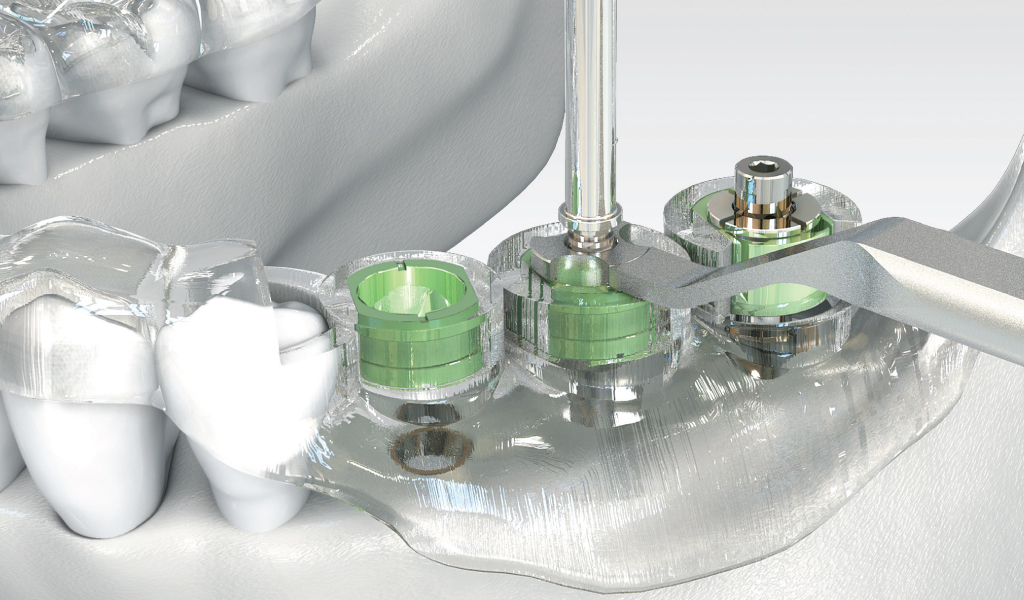
A surgical guide is designed to help transfer this planned implant position to the actual surgical procedure. The guide contains predetermined openings or guidance points that help direct the drill according to the treatment plan.
Simply put, rather than relying only on the clinical view of the teeth and jawbone during surgery, the dentist has an additional tool to help guide implant placement.
An implant surgical guide helps the dentist direct surgical instruments according to the planned position and angle.
How Is an Implant Surgical Guide Created?
The exact process may vary depending on the individual case and the system being used. In general, the dentist needs sufficient information to evaluate the jawbone, the location of the missing teeth, and relevant anatomical structures before planning implant placement.
Step 1. Oral Examination
The dentist first examines the area of missing teeth, the gums, the remaining teeth, and the patient’s overall oral health.
This examination also helps determine whether any other dental or oral health issues need to be addressed before implant treatment.
Step 2. 3D Imaging Assessment
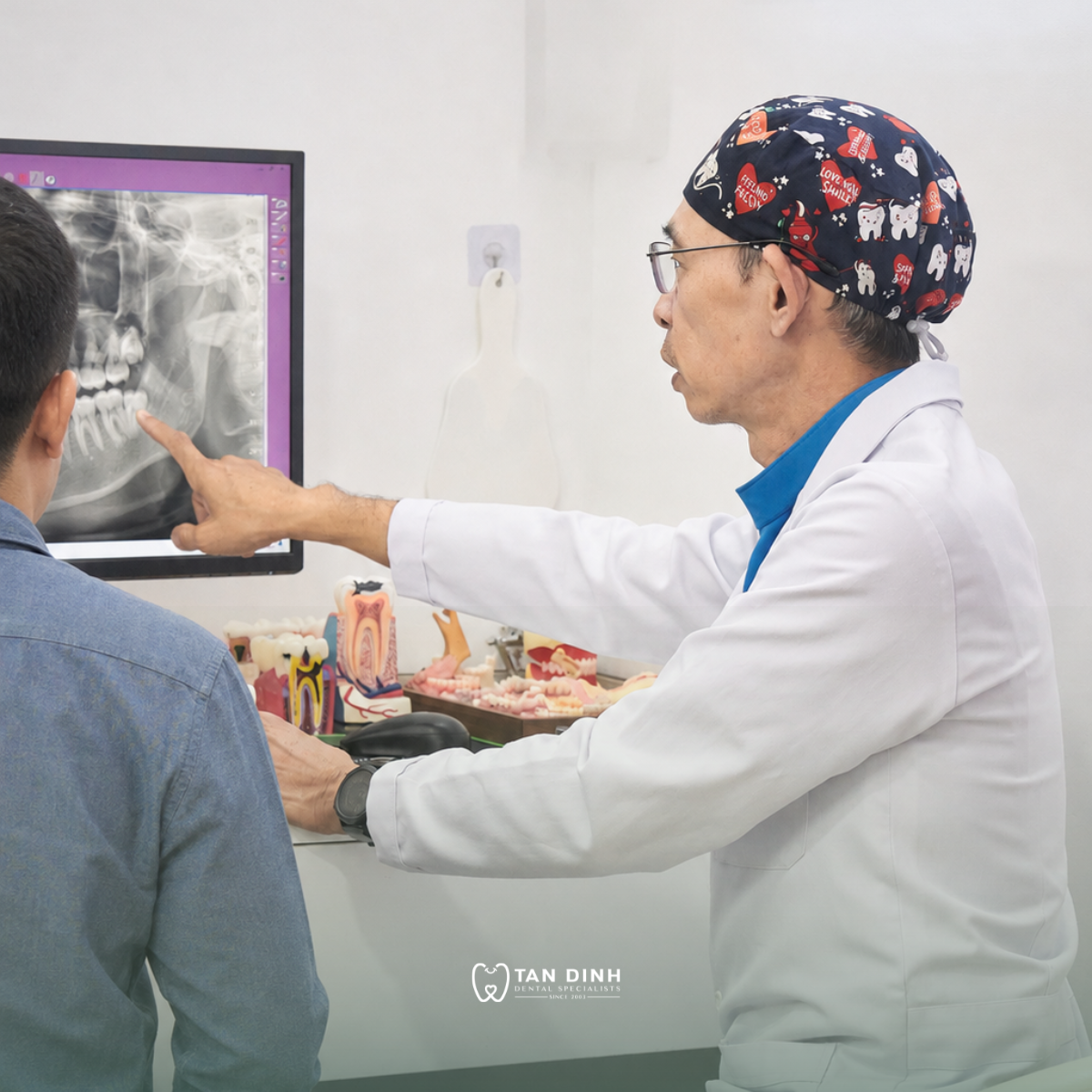
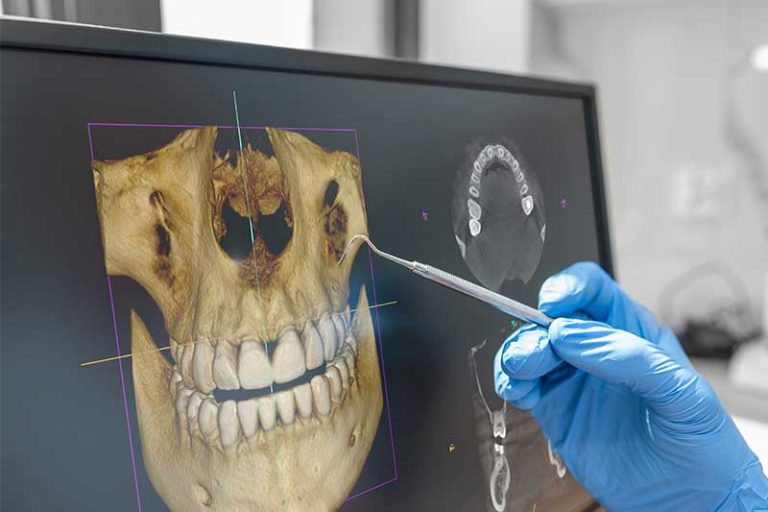
CBCT imaging, commonly referred to as a 3D dental CT scan, helps the dentist evaluate the jawbone in three dimensions.
This information supports the assessment of the proposed implant site and relevant anatomical structures that need to be considered during treatment planning.
Step 3. Planning the Implant Position
Using the necessary clinical and imaging data, the dentist develops an implant placement plan tailored to the individual case.
At this stage, the planned position, angle, and depth of the implant are important factors to consider. The plan should also take into account the final restoration that will be placed on the implant.
Step 4. Designing the Surgical Guide
The surgical guide is designed based on the established surgical plan. During the procedure, it must be positioned correctly in the mouth so that it can help guide the surgical instruments as intended.
A surgical guide therefore does not replace the dentist. It is a tool that helps the dentist carry out the treatment plan.
What Does an Implant Surgical Guide Do?
The primary purpose of a surgical guide is to provide the dentist with an additional means of transferring the planned implant position to the actual surgical procedure.
Depending on its design and the surgical technique used, the guide may help control factors such as the drill entry point, drilling angle, preparation of the implant site, and transfer of the preoperative plan to the surgical procedure.
Importantly, using a surgical guide does not mean that implant placement will be “absolutely precise.” Treatment outcomes also depend on the condition of the bone and soft tissues, treatment planning, the dentist’s clinical experience and technique, the stability and fit of the guide, and other factors.
Does Every Dental Implant Procedure Require a Surgical Guide?
An implant surgical guide is not mandatory for every implant case. A dentist may consider using one when additional guidance is helpful for planning and controlling the direction of implant placement. A surgical guide may also be useful when multiple implants are being placed or when the restorative plan requires the implant positions to be carefully planned in advance.
In other cases, the dentist may choose a different surgical approach after evaluating the patient’s individual condition.
For this reason, patients considering dental implants should not choose a treatment approach based solely on whether a surgical guide is used. More important considerations include how the dentist has evaluated the jawbone, how the implant placement has been planned, and why the recommended approach is appropriate for the individual case.
What Is the Difference Between an Implant Surgical Guide and X-Guide Dynamic Navigation?
Both an implant surgical guide and X-Guide can assist the dentist during dental implant surgery, but they work in different ways.
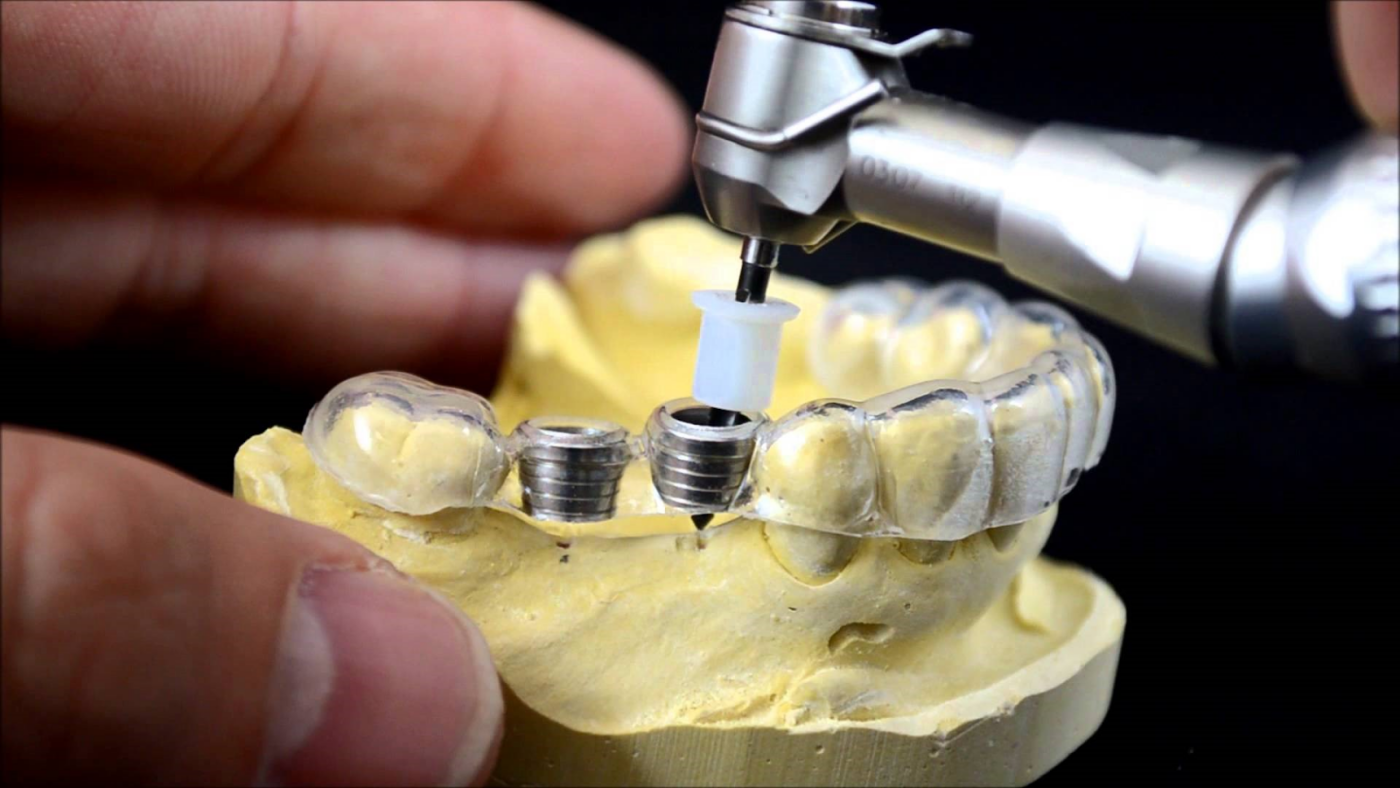
A surgical guide is a physical, “static” device that is designed in advance and positioned in the mouth during the procedure.
In contrast, X-Guide Dynamic 3D Navigation is a “dynamic” system that provides real-time 3D navigation. Based on the treatment plan, the system helps the dentist monitor the position, angle, and depth of the surgical instruments during the procedure. X-Guide can be thought of as a “navigation system” that assists the dentist during implant placement.
This does not mean that one approach is always better than the other. The decision to use a surgical guide, X-Guide dynamic navigation, or another appropriate technique should be based on the characteristics of each case and the dentist’s treatment plan.
In summary, an implant surgical guide is a tool that helps the dentist place a dental implant according to a pre-established treatment plan. It can be useful in appropriate cases, but it is not required for every dental implant procedure.
If you are considering dental implants, choosing a specific technology is less important than having the missing-tooth area properly examined, the jawbone assessed, and an appropriate treatment plan developed. Based on the examination findings, your dentist can explain whether a surgical guide, X-Guide dynamic navigation, or another approach is suitable for your individual case.